
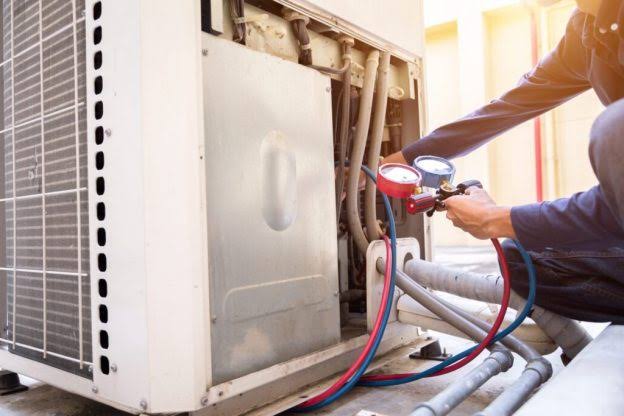
Maintaining comfortable indoor temperatures is important for homes, offices, commercial buildings, and industrial facilities. Heating, ventilation, and air conditioning systems help regulate indoor temperatures, circulate air, and support comfortable living and working environments. A professional heating and air contractor provides the installation, maintenance, and repair services needed to keep these systems operating properly. Looking for a Greensboro heating and air contractor call Triple A Heating & Cooling.
What Does a Heating and Air Contractor Do?
Depending on their qualifications and services, contractors may install air conditioners, furnaces, heat pumps, ventilation equipment, thermostats, and ductwork.
They also inspect existing systems, identify performance problems, replace damaged components, and perform routine maintenance.
Professional HVAC contractors understand that different buildings have different heating and cooling requirements. System selection should consider building size, insulation, occupancy, climate, and energy efficiency.
HVAC Installation Services
Installing a new HVAC system requires careful planning. An incorrectly sized system may struggle to maintain comfortable temperatures or operate inefficiently.
Professional contractors assess the property and determine the appropriate equipment capacity. They may also evaluate ventilation requirements, duct design, electrical connections, and thermostat placement.
Proper installation helps support system performance and reduces the likelihood of avoidable operational problems.
Homeowners should ask contractors about equipment specifications, installation procedures, warranty coverage, and maintenance recommendations before approving a project.
Heating and Air Conditioning Repairs
HVAC equipment can experience problems due to worn components, electrical faults, airflow restrictions, refrigerant issues, or neglected maintenance.
Common warning signs include unusual noises, weak airflow, inconsistent temperatures, water leaks, frequent cycling, and unexpectedly high energy consumption.
A qualified heating and air contractor can inspect the system, identify the cause of the problem, and recommend appropriate repairs.
Attempting complex HVAC repairs without proper training can create safety risks and may damage expensive equipment.
Importance of Regular HVAC Maintenance
Routine maintenance helps identify developing problems before they lead to major equipment failures.
Depending on the system, maintenance may include inspecting electrical connections, cleaning components, checking filters, examining drainage systems, testing controls, and evaluating overall performance.
Air filters should be checked regularly and replaced according to manufacturer recommendations and household conditions.
Seasonal inspections can also help prepare heating and cooling systems for periods of increased use.
Improving Energy Efficiency
Energy efficiency is an important consideration when operating heating and air conditioning equipment.
Proper system sizing, suitable insulation, sealed ductwork, programmable thermostats, and regular maintenance can help reduce unnecessary energy consumption.
Homeowners may also benefit from replacing outdated equipment with modern, appropriately sized systems.
However, efficiency improvements depend on the building’s overall condition and the equipment selected.
Choosing the Right HVAC Contractor
Before hiring a heating and air contractor, review licensing requirements, insurance, experience, customer references, and written estimates.
Ask whether the contractor has experience with the specific equipment or system involved in your project.
A reliable professional should explain the recommended work, expected costs, warranty details, and project schedule.
Avoid making decisions based solely on the lowest estimate without considering service quality and equipment suitability.
Conclusion
A professional heating and air contractor helps maintain indoor comfort through reliable HVAC installation, repair, and maintenance services. Choosing qualified technicians and following regular maintenance recommendations can support system performance, improve efficiency, and reduce unexpected repair expenses.
